
Retail competition has never been more vigorous. Between giant retail chains, established e-commerce businesses, and local independent stores, consumers have endless opportunities for where to buy products. One of the most reliable ways to keep shoppers coming back is through well-structured retail customer loyalty programs. Today, reward programs have become the cornerstone of relationship marketing. These loyalty programs are more than just a digital stamp card. They build a lasting relationship between your store and its customers. It gives you a clear answer to how to increase retail sales without cutting margins.
For a convenience store, liquor outlet, or general retail location, a retail store rewards software platform offers you practical ways to shape purchasing behavior at the point of sale. This blog discusses the actionable ways to propel an impactful loyalty program: structuring rewards, connecting to checkout, training staff, and encouraging your launch.
Why Brick-and-Mortar Stores Need Digital Customer Loyalty Program Software?
Foot traffic alone doesn’t guarantee repeat business anymore. Customers can get the same products cheaper online or at the store down the street. What actually brings them back is a reason tied to their purchase history, not a generic coupon mailer. That’s the real transformation with digital rewards: A paper stamp card gets lost in a wallet, while digital stamp cards don’t. They track visits automatically and tie every transaction back to a real customer profile. That data is worth more than the discount itself. It tells you who your regulars are, what they buy, and when they’re likely to walk back in. The financial impact of keeping those regulars is massive: research shows that loyal customers are 64% more likely to purchase more frequently and 31% more willing to pay higher prices (Sources: McKinsey), and active loyalty members generate 12% to 18% (Sources: Queue.it ) more incremental revenue annually compared to non-members.
Key advantages:
- Increased repeat visits through clear, traceable incentives
- Improved basket size and frequency when rewards are tied to spend or product categories
- Richer customer data through point-of-sale customer tracking, allowing segmentation and focused campaigns
- Simplify the process with virtual registration and redemption compared with physical punch cards or paper records
Step 1: Choose Your Rewards Structure (Points vs. Tiers)
You should select the structure that best fits your customer buying habits and business aims. Two popular models are points-based systems and tiered programs. Some retailers use a mix of both.
Points-based programs:
- How they work: customers earn points per dollar spent or per visit, it is redeemable for discounts, free products, or other perks
- Best for: high-frequency retailers (such as convenience stores, liquor stores) where simple collection increases customer retention.
- Benefits: It’s easy to understand, flexible reward options, easy ROI tracking
Tiered programs:
- How they work: customers qualify for levels (Silver, Gold, Platinum) based on spend or visits, with each tier offering more valuable rewards.
- Best for: businesses striving to boost average order value and support customers with higher spending
- Benefits: drives goal-oriented spend, favors VIP treatment and exclusive benefits.
Hybrid model:
Combines points for constant engagement with tiers for long-term value, making it ideal for businesses where both visit statistics and purchase value matter.
The structure you opt for should be a strategic decision that shapes your technology needs, staff training, and marketing choice.
Step 2: Sync with Your Point-of-Sale (POS) System
For a store aiming to enhance repeat visitors, keep lines moving, and data flowing, a POS integrated loyalty system is non-negotiable. It automates points addition and repurchase, documents customer identities, and sustains transaction data within your reporting.
Why integration matters:
- Simple accessibility and reward redemption reduce friction and staff workload.
- Reliable point-of-sale customer tracking provides accurate reward setup and reporting
- Integrated data allows multi-channel campaigns based on original sales records
Integration Essentials:
- Confirm compatibility — Does the platform support your POS version and terminals?
- Map the data flow — which fields sync (name, phone/email, totals, items purchased)?
- Prioritize real-time operations — points should be credited and redeemed instantly at checkout
- Verify security and compliance — customer data must be saved and handled per regional privacy laws
If you lack in-house integration expertise, choose a provider who will map fields, test transactions, and approve reports. When there is a properly connected retail store rewards software solution, running a loyalty program becomes uncomplicated, whether you manage a single shop or ten.
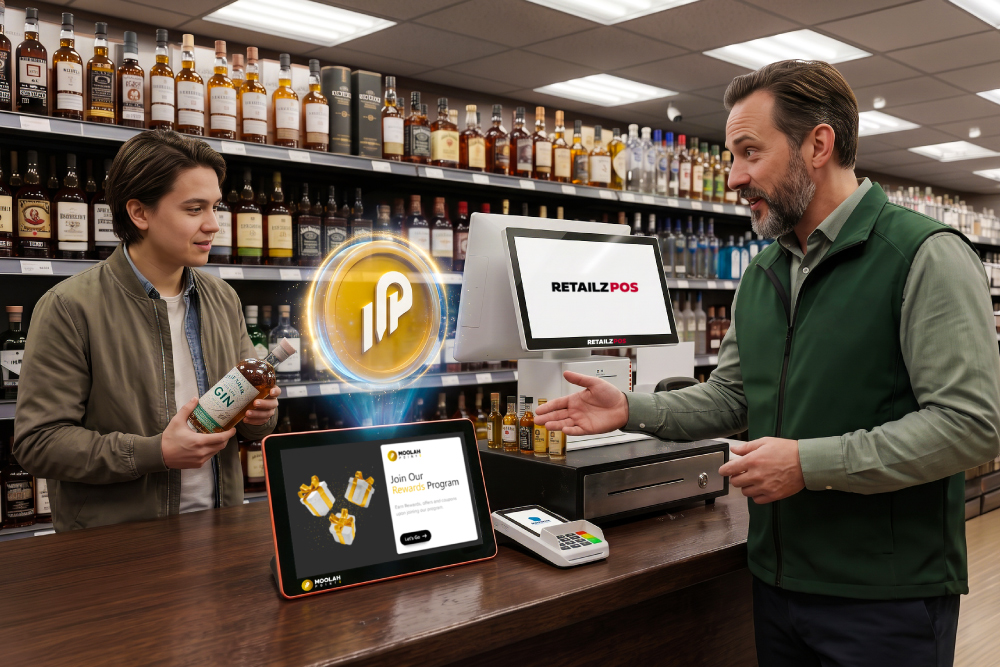
Step 3: Train Checkout Staff to Pitch the Program
Your store staff is your most powerful registration channel. Signs on a wall are easy to ignore—a warm, genuine invitation from a team member isn’t.
Training Focus Area:
- The one-liner: a 7–10 second script staff can use every time. Example: “Want to join our rewards program? You’ll get instant points on today’s purchase plus exclusive offers.”
- Fast enrollment: staff should sign customers up via phone, email, or loyalty ID without slowing the line
- Objection handling: short, ready answers for privacy questions or “how do points work?”
- Role play: practice natural prompts for both slow and busy shifts
- Incentives: small contests or recognition for staff who enroll the most customers in a day or week
Focus on quick wins and clear benefits because shoppers care about what they get right now, not how the system works. When your staff feels confident, every transaction becomes a chance to bring a customer back.
Step 4: Promote Your Launch via In-Store Signage and Receipts
Remember, a strong launch needs more than just a single poster to spark interest. Reach customers right at the register and on the sales floor during the exact moments they are deciding what to buy. When it comes to engagement, almost three-quarters (72%) of consumers would complete a quiz in exchange for points, while 65% would sign up for a newsletter and 61% would leave a written review. More than half (52%) would stop participating in a program if there weren’t enough ways to earn points other than purchasing. (Sources: Antavo)
Promotion channels:
- Point-of-purchase signage at entrances and registers
- Counter cards and shelf signs tied to specific rewards or categories
- Receipts with a short enrollment reminder and QR code
- Email/SMS to existing customers with a limited-time sign-up bonus
- Social media and local ads announcing the program
Messaging tips:
- Lead with the benefit: “Earn points toward free items” or “Start with 50 bonus points”
- Use urgency moderately — a limited-time bonus can push early participation
- Keep instructions straightforward; a QR code beats a paragraph of steps
For convenience store marketing, pair your launch with an everyday favorite like a free small item after a set number of visits. This fits right in with how your customers already shop, through quick, daily purchases.
How to Track Your Success
Once you launch, keep an eye on these simple metrics to see what is working and where to tweak.
- Enrollment rate: The percentage of daily shoppers who actually sign up at your stores.
- Active members: The number of people who have earned or spent points in the last three months.
- Redemption rate: How often customers actually claim their rewards instead of just hoarding points.
- Repeat purchase rate: How much more often your rewards members come back compared to regular shoppers.
- Average order value (AOV): Whether customers start spending more money per visit after they join the program.
- Campaign profit (ROI): Making sure the extra sales you get from the program cover the cost of the rewards you give away.
Use these numbers to make quick adjustments. If lots of people sign up but nobody uses their points, make your rewards easier to earn. If total spend per visit is not going up, offer bonus points when shoppers hit a target amount.
Special Considerations by Retail Type
- Convenience stores: Give importance to speed and simplicity. The points-per-visit structure or digital stamp cards rewards frequent, low-ticket purchases well.
- Liquor stores: strong liquor store loyalty programs account for age verification and regional alcohol marketing rules, while rewarding top shoppers with exclusive perks and targeted exclusive deals.
- High-risk or regulated retail: confirm your platform supports the local compliance and reporting features you need before committing.
Example Launch Plan (30 Days)
- Week 1: Choose your rewards setup, connect to your POS, and create your store signs and receipt messages.
- Week 2: Train your staff and test how easy it is to enroll new members.
- Week 3: Try a quiet soft launch in one location to see how customers and employees handle the process.
- Week 4: Launch across all stores with full signage, receipt prompts, and a limited-time sign-up bonus.
Avoid These Four Common Setup Errors
- Making rewards too confusing: Keep the math simple so customers know exactly what their points are worth.
- Weak checkout connections: Test your system thoroughly before launch to avoid missing points or register glitches.
- Skipping team training: If your cashiers feel unsure about the program, customer sign-ups will stall.
- Ignoring your sales stats: Check your numbers regularly and tweak your offers instead of running on autopilot.
Conclusion
Your rewards program works best when it sits at the heart of daily retail operations. Connecting the system to your checkout, backing it with a confident store team, and promoting it right where shoppers buy drives a steady lift in both customer loyalty and store revenue.
For retailers ready to act, Moolah Points, customer loyalty program software, delivers a fast, POS-friendly way to execute, implement, and manage a program specific to in-store workflows and reporting essentials.